
Data Science
Data science is an exciting discipline seeking to turn raw data into understanding, insight, and knowledge. More and more firms and institutions are hiring data scientists who must be able to acquire, understand, and analyze complex and unstructured data, to interpret the meaning of the results, and to communicate the results.
AI-powered decision-making of the future will be highly autonomous and fueled by large data pools. To ensure reliability and efficiency of these systems, advanced analytics methods need to be embedded in decision-making processes. Materializing this vision in research and teaching necessitates bringing together techniques and tools from data science and business studies. This is of central importance for both research and teaching. Consequently, our teams are engaged in research projects spanning the entire data science life cycle – ranging from algorithmic innovations, prototyping to deployment, and monitoring of full-fledged decision support systems. These research activities offer ample opportunities for high-caliber publications in information systems, management and computer science outlets.
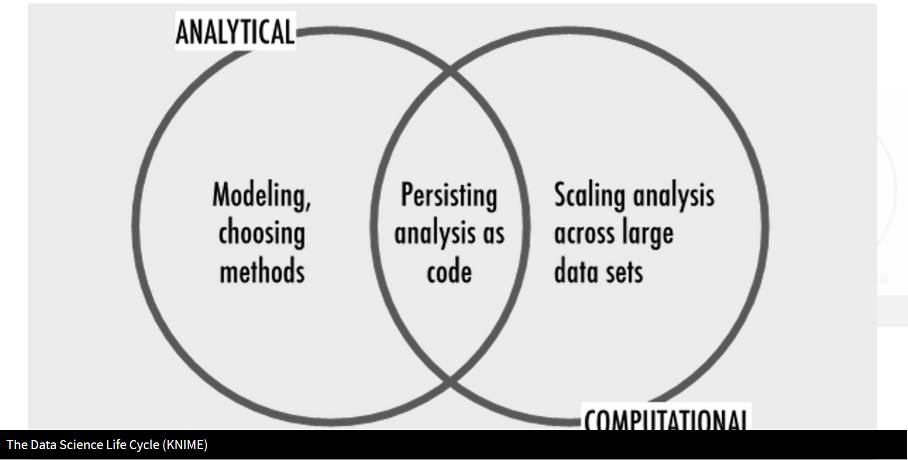
It should be self-evident that two spheres are of special importance for data science – analytical (e.g., statistical, and economic modeling) and computational (e.g., software engineering, algorithm design, and IT management). Programming bridges between these two spheres with computer code constituting the lingua franca of data science. Programming is a cross-cutting tool that is part of every data science project. Data scientist do not need to be expert programmers, but programming skills pay off because they allow automating common tasks and solving new problems with greater ease.
[get_content_from url=’https://www.wiwi.uni-wuerzburg.de/wiba/forschung/journal-publikationen/‘ with=’#bibsonomy-container-209330779dd0851228601247bf406952′]